Published on:

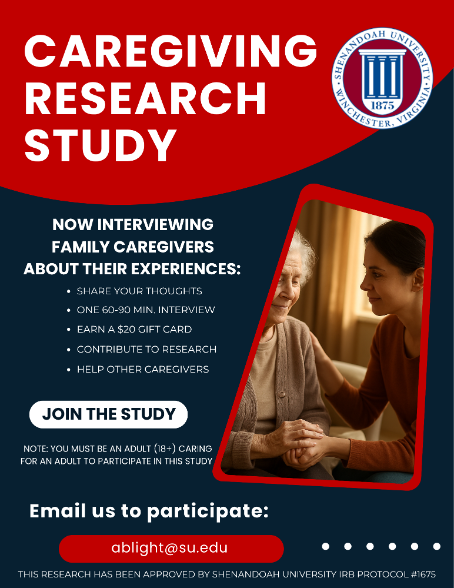
If you are currently serving as a family caregiver for an adult age 18+ and would like to be interviewed for research contributing to a new book about caregiving, please read this post.
I’ve been researching, writing, and speaking about family caregiving for many years. These efforts have led to the development and dissemination of various resources for family caregivers and the professionals who support them. I’m particularly focused on models for caregivers because they have the potential to unlock new ways of understanding the caregiving experience.
One of my caregiving models, The Caregiver Mindshift, is the foundation of my new research study, The Caregiver Mindshift: Cognitive Adjustments Across the Trajectory of Family Caregiving. Knowledge gained from this study will be central to the development of my next book on caregiving (to be announced later).
If you’re a family caregiver and would like to participate in this research study, please send me an email ([email protected]) to express your interest. We will be scheduling interviews with caregivers through the summer and into the early fall. Please note that we are interviewing adult caregivers (age 18+) who are currently caring for an adult age 18+, or who cared for an adult age 18+ within the past year.
Additional background and details about the study are found below.
Background
In 2025, more than 63 million American adults provided ongoing care to adults or children with a medical condition or disability, which is approximately one-quarter of all adults in the United States. This represents an increase of almost 10 million family caregivers over the last five years in the United States alone (AARP & National Alliance for Caregiving, 2025).
Unable to “fix” their loved one, the family caregiver must learn how to provide ongoing support, usually without formal training or sufficient guidance. As the family caregiver continues to engage in supportive care, there is more than a physical change in behavior that occurs. Extended family caregiving can alter the way a person views themselves and others. The mental, emotional, and social effects of care may not be consciously recognized, but they can be profound and permanent.
In order to successfully traverse through a protracted caregiving trajectory, the family caregiver must adjust their mind to accommodate the emerging circumstances of the care receiver. This may involve mental, emotional, and cognitive adjustments that enable the caregiver to persist in an emerging and dynamic role in relationship to the care receiver.
Such cognitive adjustments occur over the passage of time through a learning process the researcher calls the caregiver mindshift. Holistically, the caregiver mindshift is marked by three cognitive stages (disorientation, sense making, and reorientation) that loosely align with a person’s length of experience caregiving for a loved one. The cognitive phases of The Caregiver Mindshift Model were inspired by transformative learning theory (Mezirow, 2009).
The researcher has presented The Caregiver Mindshift Model in keynote addresses at conferences of family caregivers and learned that the model resonates with audiences. This research will bring additional evidence-based support for the model. The study was approved by the Institutional Review Board of Shenandoah University, IRB Protocol #1675, on April 1, 2026.
Significance
This research is significant because it applies transformative learning theory to the context of family caregiving, producing practical insights about the cognitive processes that enable family caregivers to resiliently continue providing care to loved ones over a protracted period of time.
Purpose
The purpose of this qualitative study is to explore how family caregivers describe cognitive adjustments over the trajectory of caregiving and to examine the extent to which these experiences align with The Caregiver Mindshift Model.
Methods
Deductive Qualitative Analysis (Fife & Gossner, 2024) is the methodological approach used in this study.
The study uses purposive sampling to conduct semi-structured interviews with 25-40 family caregivers (age 18+), providing care to adults (age 18+), to explore how family caregivers describe cognitive adjustments over the trajectory of caregiving and to examine the extent to which these experiences align with the Caregiver Mindshift Model.
Critical theorizing, reflexivity, negative case analysis, and memoing will be performed to strengthen trustworthiness, rigor, and accuracy of the study.
Caregiver Participants
Family caregivers who meet the qualification criteria above and would like to participate in the study should send an email to Dr. Aaron Blight (see below). After granting informed consent, participants will be invited for an interview estimated to take 60-90 minutes. Upon completion of the interview, a gift card will be provided to each participant as an expression of thanks.
Contact
For more information, please contact Dr. Aaron Blight, Assistant Professor of Public Health, Shenandoah University, at [email protected] or via Caregiving Kinetics at [email protected].
REFERENCES
AARP & National Alliance for Caregiving. (2025, October 28). Caregiving in the US 2025. AARP. https://www.aarp.org/pri/topics/ltss/family-caregiving/caregiving-in-the-us-2025/
Fife, S. T., & Gossner, J. D. (2024). Deductive qualitative analysis: Evaluating, expanding, and refining theory. International Journal of Qualitative Methods, 23, 1–12. https://doi.org/10.1177/16094069241244856
Mezirow, J. (2009). An Overview on Transformative Learning. In K. Illeris (Ed.), Contemporary Theories of Learning (pp. 90-105). New York, NY: Routledge.
Posted in Caregiving, Research